

Autonomy Zone
An agent’s Autonomy Zone is the contextual operating envelope it acts within: what it is trying to achieve, the conditions under which it may act, and the consequences the enterprise accepts. Inside the zone, the agent is free to pursue its mission. Every covered action that would cross the boundary is decided before impact.
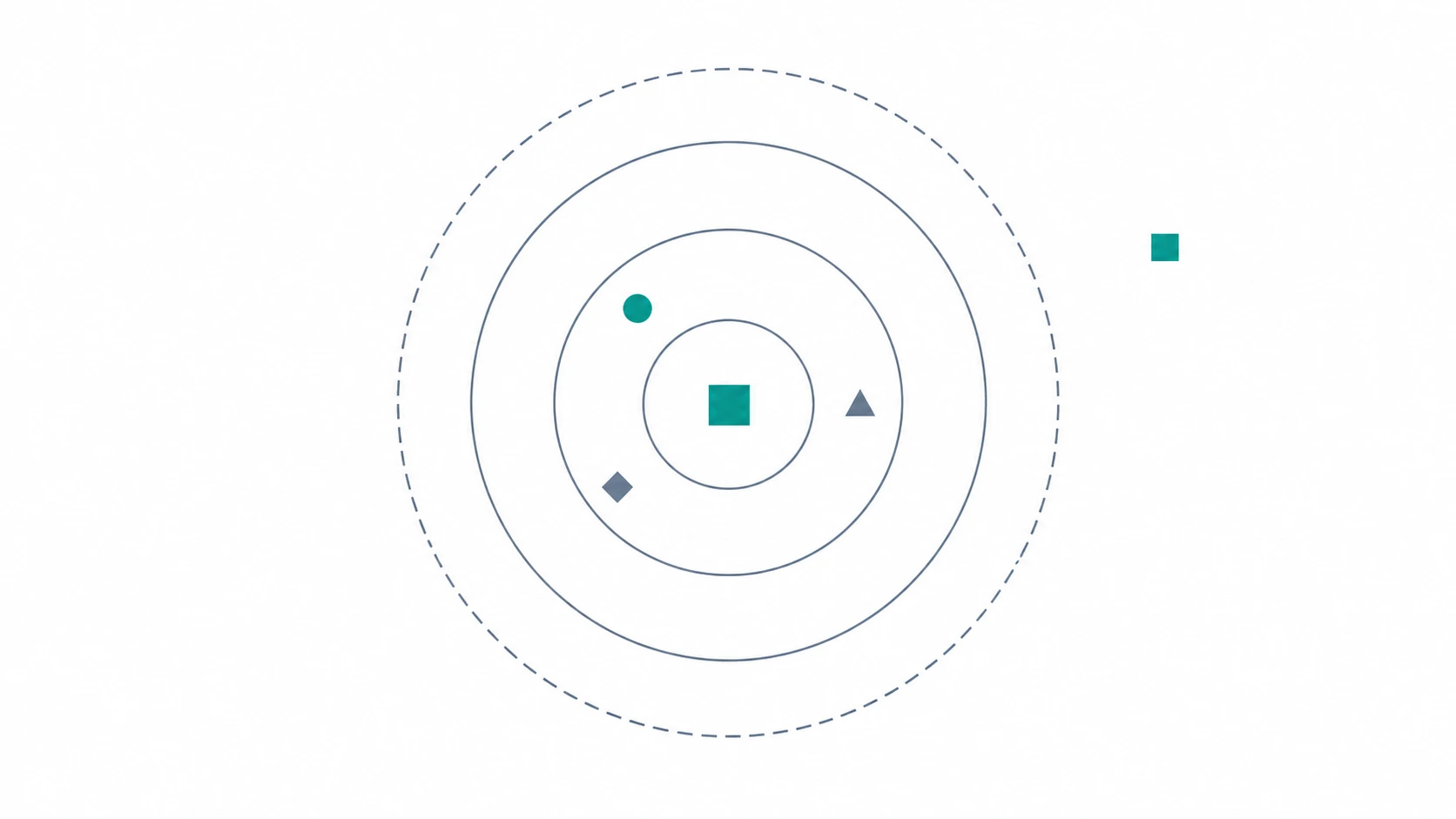

The agent brings the mission; the zone brings the rules. Think of a basketball court: the lines and the rules of the game are fixed, the player moves freely inside them, and the referee calls what crosses a line. The zone is the court, its intent policies are the rules, and the verdict is the call.
What a zone holds
Section titled “What a zone holds”A zone holds intent policies across five dimensions: Quality, Economics, Security, Safety and Compliance. Dimensions explains what each one covers. Each policy runs in Disabled, Monitor or Enforce mode in that zone, as Modes explains.
Zones follow your organization
Section titled “Zones follow your organization”Zones sit on your organization’s own tree of units, usually synchronized from your directory. You do not maintain a second hierarchy.
| Rule | What it means |
|---|---|
| A zone lives on a unit | Any unit may carry one zone, and most do not |
| Inheritance is never optional | A unit without a zone inherits the zone of the nearest unit above it that has one. Every zone inherits every zone above it |
| Add, never loosen | A lower zone can add policy, never remove what it inherits |
| One agent, one zone | Each agent is assigned to exactly one zone: by default the nearest zone at or above its owner’s unit, or one a user sets by hand |
| No hidden targeting | A policy cannot apply to some agents in its zone and not others. If it should not reach an agent, move the agent or author the policy lower in the tree |
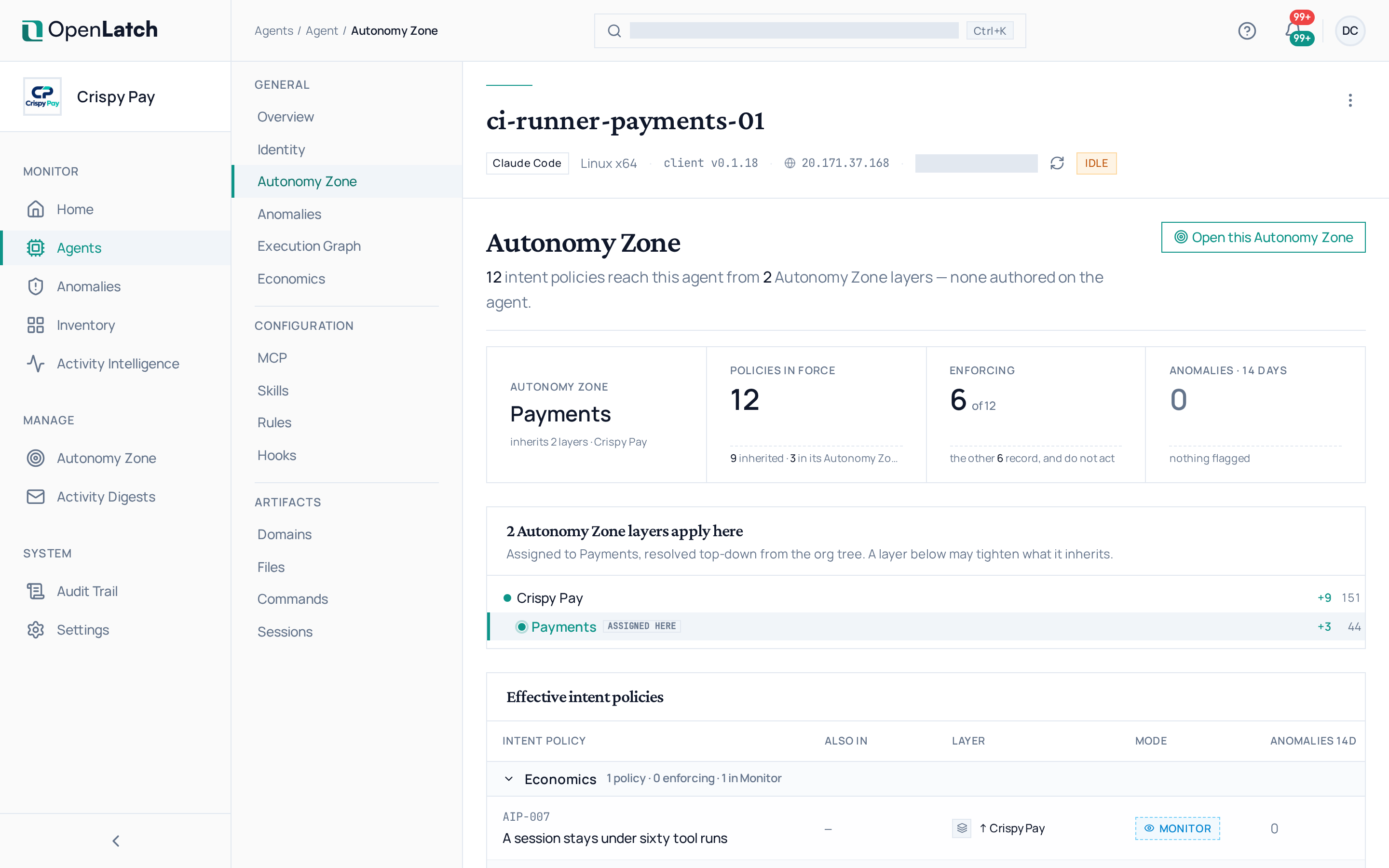
The effective zone
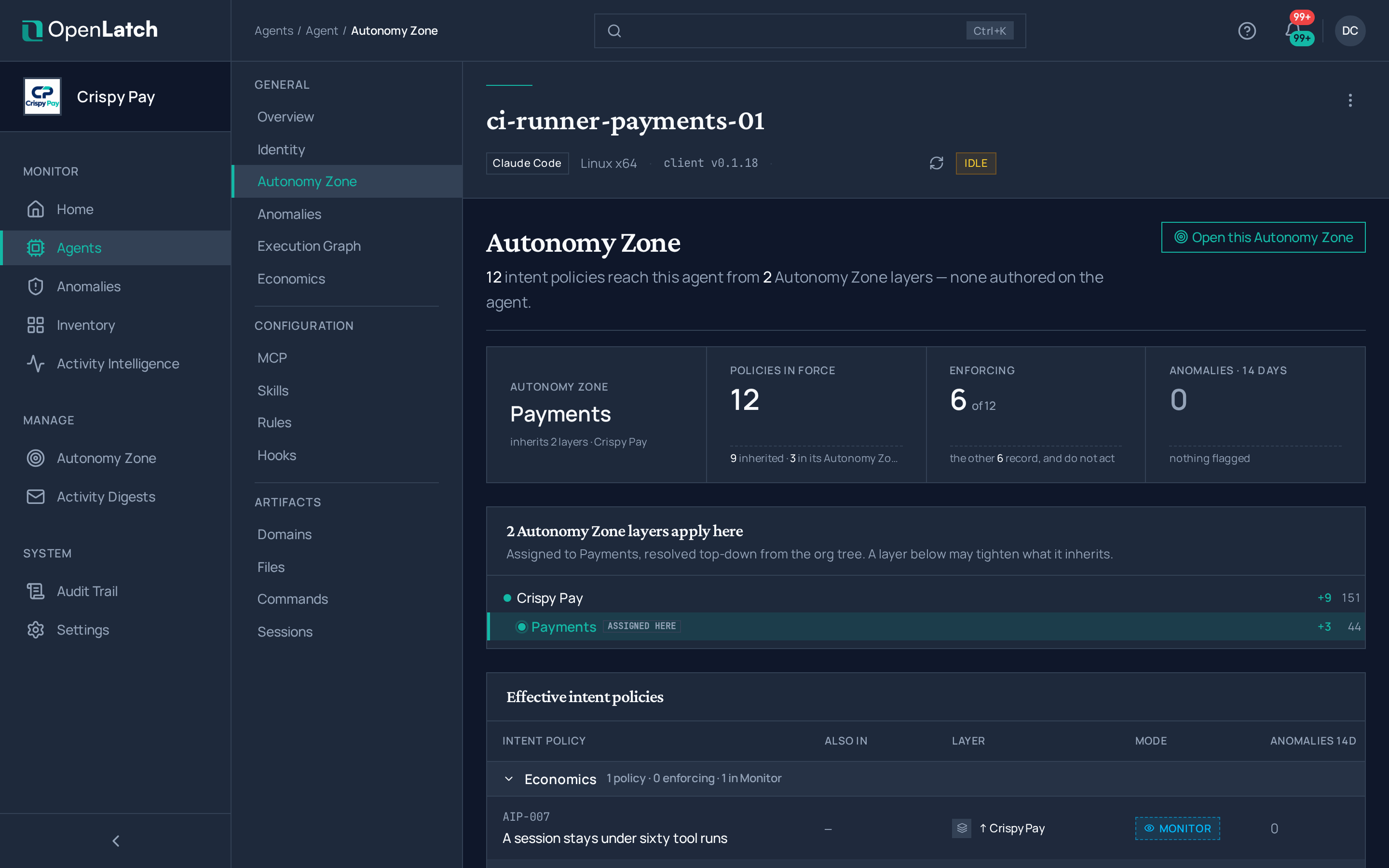
Section titled “The effective zone”What one agent actually operates under is its effective zone: every policy of its assigned zone and of every zone above it, grouped by dimension. Each policy names the zone it came from. When the same policy is held at several levels on an agent’s path, it reaches the agent once, in the strictest of its modes.
What a zone is not
Section titled “What a zone is not”| Not | Because |
|---|---|
| A static list of guardrails | The same action can get a different verdict for a different agent, mission or environment |
| Instructions in the prompt | A prompt shapes behavior and can be forgotten. The zone is enforced at the agent’s execution boundary, outside its context window |
| A permission list | Existing identities and permissions are inputs to the zone, which judges the action in context |
| An unbypassable sandbox | The threat model is a misbehaving agent, not a malicious operator |